
INSIGHT
The Smelter Play
The brief in motion
The Smelter Play: Dead Industry, Live Power
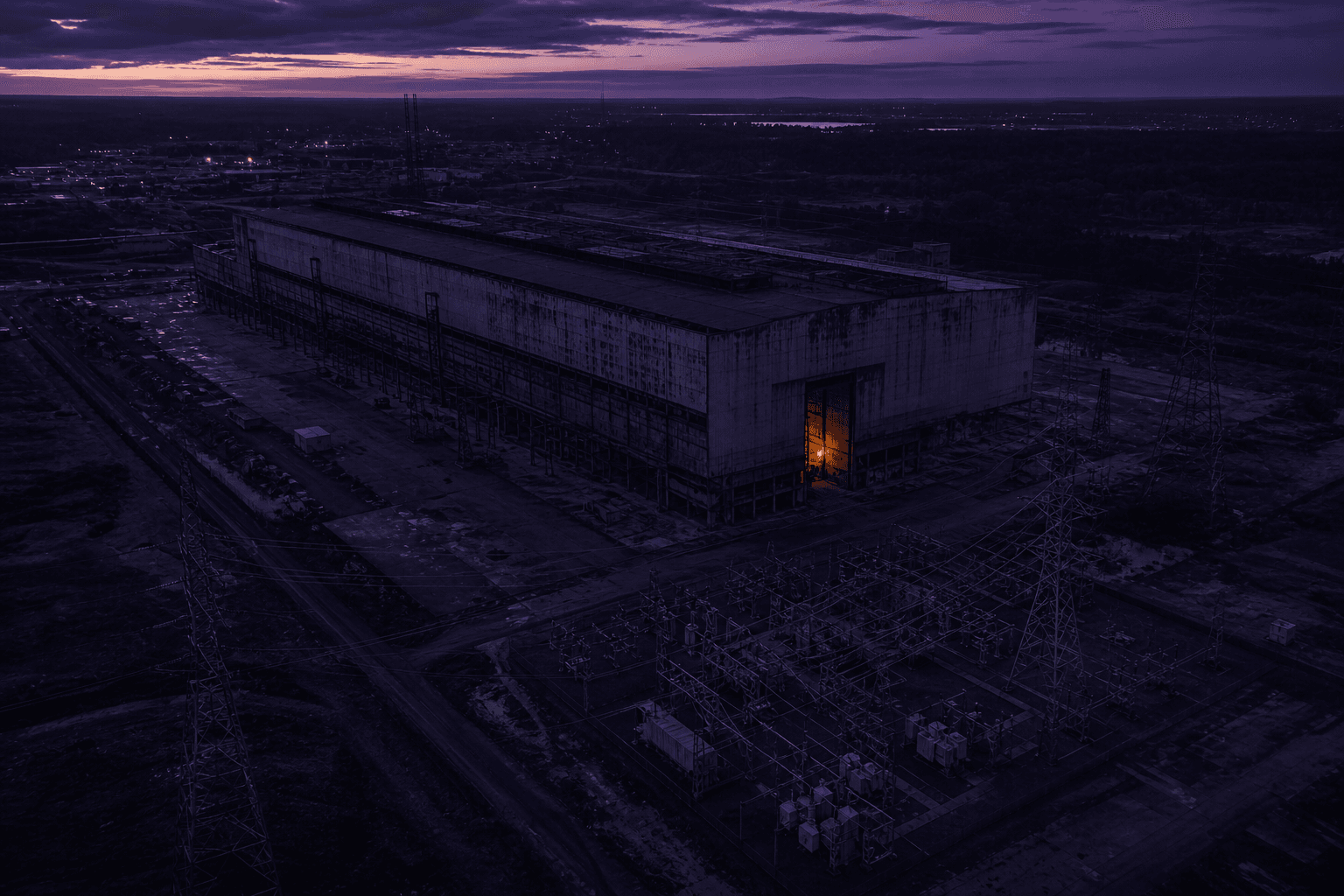
The fastest AI data center is the one that does not wait
Everything in an AI infrastructure buildout can be compressed with money. Construction crews work double shifts, hardware ships on schedule, engineering runs in parallel. Grid interconnection does not compress. It is the one input you cannot buy faster, and it now sets the pace of the entire industry. McKinsey estimates global AI-ready capacity needs to grow from 82 gigawatts in 2025 to 219 gigawatts by 2030, backed by hyperscaler capex of $660-725 billion in 2026 alone. Nearly all of that growth is waiting on the same bottleneck: a place to plug in.
The queue is the bottleneck
Ask any developer with a greenfield project where their schedule went, and the answer is the interconnection queue. Requests for large new grid connections routinely sit in study and approval for years, and utility-scale permitting stacks on top of that. Industry reporting puts the average US interconnection wait north of four years, with constrained markets running as long as ten. This is why a greenfield AI data center realistically runs toward 36 months from commitment to first load, and why so many announced campuses have energization dates that keep sliding to the right.
Dead industry, live power
Here is the asymmetry the market is still waking up to. The industrial landscape is dotted with sites built in an era when heavy industry was the grid's largest customer: smelters, mills, factories, and the malls that grew up alongside them. Many have gone dark for reasons that have nothing to do with their infrastructure. The product died. The power did not.
What a dead industrial site can carry with it is exactly the list a data-center developer spends years assembling: an interconnection agreement measured in hundreds of megawatts, an on-site substation, transmission rights, industrial zoning, floor loading rated for heavy machinery, water access, and often rail. Every item on that list represents years of queue time and permitting risk that a greenfield project must absorb and a retrofit project simply inherits. Roughly 120 US coal plants are expected to retire over the next five years, which is less a demolition schedule than a pipeline of interconnect-rich sites coming onto the market.
The pattern is already public
As Data Center Knowledge first reported, a Somerset, NY coal plant closed in 2020 is now TeraWulf's Lake Mariner AI and HPC campus, running toward 500 MW with new buildings completed in under a year and backed by a $290 million liquid-cooling investment. Fortune reported that Homer City, once Pennsylvania's largest coal plant, is becoming a 4.5 GW gas-powered AI campus that kept its transmission lines, substations, and water rather than starting from bare land. Data Center Dynamics reported that Verdant's Project Lufkin, a Texas paper mill closed since 2007 and bought for $11 million at auction, is scaling from 175 MW in 2026 toward 1.1 GW by 2028. In Ohio, a former uranium-enrichment site at Piketon has been announced as a 10 GW AI campus, the PORTS Technology Campus, paired with 9.2 GW of new gas generation. None of these were valued for their power when they were industrial carcasses. All of them were repriced once someone understood what the interconnection was actually worth.
Why smelters are the purest case
Aluminum smelting is electrolysis at industrial scale, one of the most electricity-intensive processes ever operated commercially. A smelter is, in essence, a machine for converting hundreds of continuous megawatts into metal. When one is built, everything around it is engineered for that draw: dedicated supply contracts, heavy substations, and transmission built to serve a site in the 250MW to 1GW class.
The load profile is the quiet advantage. A smelter draws power flat, around the clock, for decades, because interrupting the pots destroys them. That is precisely the load shape of an AI training campus, flat and continuous, which means the electrical infrastructure is not merely big enough. It is shaped correctly. Add robust structures, high bays, crane rails, and industrial water systems, and you are looking at a building that wants to become a data center.
The arithmetic that gets attention
One example of this trade is public: a dead aluminum smelter, priced around $200 million as an industrial carcass, is becoming the anchor of an AI campus under a 20-year lease reportedly worth $19 billion. Read that spread carefully, because it is not magic and it is not a typo. The site was never worth $200 million as a building. It was mispriced because the market valued it as failed industry, while its real asset, permitted power at giga-scale with live transmission, was worth orders of magnitude more to the one buyer who knew how to use it. The play is not real-estate speculation. It is repricing infrastructure from its dead use to its highest one, the same repricing visible in the mall sector, where 500,000 to 1.2 million square foot boxes with wide column spacing and large parking fields, the land where substations and new halls actually get built, are already following Rackspace's early San Antonio conversion and the Amazon fulfillment centers that replaced dead malls like Randall Park and Euclid Square in Ohio.
What a retrofit actually looks like
Converting such a site is not gentle rehabilitation. The interior is typically gutted. What remains, and what matters, is the shell, the structure, the substation, the water, and the rights. From there the conversion runs in phases: energize and fit out the first hall while later phases are still under construction, so revenue-generating load arrives early instead of waiting on the whole campus.
Liquid cooling is what makes the timeline credible. An AI-mission-specific facility built around direct-to-chip liquid does not need the vast air-handling plant, raised floors, and low-density sprawl of a legacy design. It needs power distribution, coolant loops, and heat rejection, all of which suit an industrial shell. That is how 12 to 18 months to first load becomes an engineering plan rather than a slogan, against 36 for the greenfield alternative.
- 01Diligencepower-rights and structural verification before close
- 02Demolition and shell prepgut the interior, keep the structure, substation, and water
- 03Electrical and mechanical fit-outdistribution, coolant loops, heat rejection
- 04First load12-18 months total, first hall energized while later phases build out
The diligence that separates deals from disasters
The play only works if the power is real, and this is where the trade is won or lost before closing. Interconnection rights must be verified as live, transferable, and sized as claimed; utilities can and do reclaim capacity from lapsed agreements. Substation and transformer condition must be inspected by people who know what aging iron looks like, because replacement lead times run to years. Water rights and volumes need confirmation against the cooling design, not brochure figures. Environmental legacy deserves respect: smelters carry real remediation histories, and that history priced correctly is a discount, while discovered late it is a disaster. The structure itself is usually the easiest question, but floor loading and clearances still have to be measured, not assumed. As the industry rule of thumb puts it, an abandoned industrial interconnect with an adjacent substation carrying headroom is gold, but only once someone has actually walked the site and confirmed it.
None of this is exotic. All of it is unforgiving. It rewards operators who have walked buildings like these and commissioned the systems that go into them.
The window
Mispricings close. Every quarter, more capital learns to read a dead smelter's balance sheet the right way, and the spread between industrial-salvage pricing and AI-infrastructure value narrows. The sites with the cleanest power rights and the best bones will trade first.
The map of dead industry is a map of future AI capacity. The buyers who move fastest will not be the ones with the most capital. They will be the ones who can walk a site, verify the power, scope the retrofit, and commit while everyone else is still standing in the queue.
Next step
Bring a site, or bring a target
Retrofit Site Acquisition Advisory qualifies candidate sites and verifies the power before you close. Send a property or a capacity target and Jon will scope the intake call.